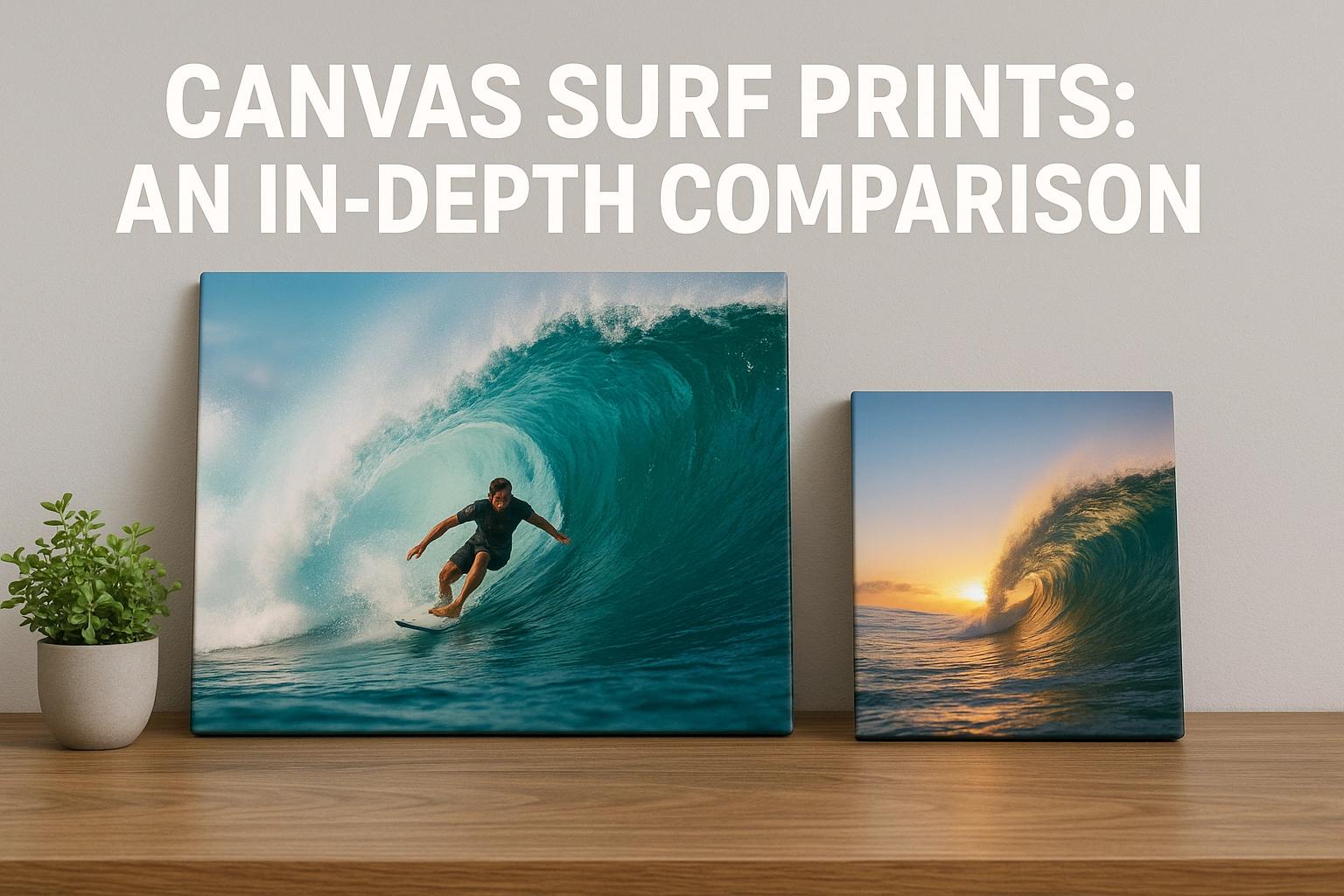
A perfect wave deserves more than a flimsy poster. The right canvas surf prints amplify detail, preserve color, and deliver the textured depth that the canvas surf art demands. Get the choice wrong, and motion turns mushy, whites yellow, and your wall loses its punch. If you care about how foam, sky, and water translate from screen to wall, this comparison was built for you.
In the pages ahead you will learn how canvas materials, cotton versus poly blends, affect sharpness and texture. You will see why pigment giclée inks outperform dye sets for longevity and color fidelity, and how coatings, matte, satin, or gloss, shape contrast and glare. We will compare stretcher bar quality, edge wraps, and float frames, and we will evaluate archival ratings, UV resistance, and humidity tolerance for coastal homes. Expect clear guidance on ideal resolutions, soft proofing basics, and common sizes that respect surf photo aspect ratios. We will also map price tiers, value picks, and when to step up to premium. By the end, you will know exactly which canvas surf prints deliver gallery-level impact and which options to skip.
Comparison Criteria: What to Consider
Price: Canvas vs. Acrylic vs. Metal
Canvas is usually the most budget friendly for surf imagery. At mainstream labs, a 24×36 canvas often lists between $90 and $150, while comparable acrylic ranges from roughly $180 to $400, and metal from about $160 to $350. To control costs and waste, choose standard depths and FSC-certified stretcher bars on canvas. If you are outfitting a full Coastal Calm living room, canvas stretches your budget across multiple pieces. DIY can further reduce cost, for example this beach-inspired DIY framed canvas art shows how to assemble a large-format look for a fraction of custom pricing.
Quality: Texture, Durability, Vibrancy
Canvas brings a woven texture that complements rattan, wicker, driftwood, and blue ceramics that define modern coastal decor in 2025. The tactile surface softens wave-inspired patterns and sunset horizons, ideal for the serene Coastal Calm aesthetic. Acrylic excels in perceived depth and vibrancy, the glossy face makes ocean blues and spray highlights pop, though fingerprints and glare can be issues near windows. Metal prints are extremely durable and moisture tolerant, a strong choice for bathrooms, rentals, or the fisherman core vibe seen in the Hooked on Reel Life collection that channels the fisherman core trend. For ocean and beach scenes, which dominate summer 2025 wall art trends, choose matte canvas to minimize reflections or satin metal to balance color punch with reduced glare.
Inks: Pigment vs. Dye
Most premium canvas surf prints use pigment inkjet, often labeled giclee. Pigment particles resist UV, ozone, and humidity better than dye-based inks, which means colors stay stable for decades under typical home lighting when paired with a UV topcoat. Dye-based systems can deliver slightly higher saturation and smoother gradients on glossy acrylic or metal, but they are more susceptible to fade in sunlit rooms. For homes with large windows and salt air, prioritize pigment inks, request a spray or roll-on varnish for canvas, and look for UV-blocking acrylic face mounts. If your goal is maximum vibrancy for bold Urban Glow pairings, dye-sublimated metal in gloss finishes can be striking, provided you avoid direct afternoon sun and plan mounting accordingly.
Canvas vs Other Print Mediums
Cost and value
For surf imagery, canvas delivers the best price-to-impact ratio compared with acrylic and metal. At most labs, the same image printed on canvas is often 20 to 50 percent less than acrylic and aluminum, which leaves room in the budget for larger sizes or float framing. Canvas is lighter, so shipping and installation are simpler, and you avoid the glare that can plague glossy acrylic in sunlit coastal homes. That matters as Coastal Calm gains momentum for 2025, where homeowners refresh walls seasonally with wave-inspired patterns and coastal silhouettes. If you are outfitting a wide hallway or a 9 to 12 foot feature wall, canvas lets you scale up or create multi-panel triptychs without the premium hardware and handling that acrylic or metal require.
Texture versus color pop
Material choice shapes the mood of canvas surf prints. Cotton canvas has a natural, tactile weave that complements 2025’s modern coastal mix of rattan, wicker, driftwood, and blue ceramics, and it renders seafoam hues and sandy neutrals with subtle gradations. Polyester canvas, with a tighter uniform thread, yields higher color saturation and cleaner edges, ideal for vivid sunset horizons or bold barrel shots under gallery lighting. Acrylic and metal still win for ultra-gloss punch, but they can introduce reflections near windows. A practical approach is cotton for serene Coastal Calm rooms, polyester for spaces leaning Urban Glow or for fisherman core accents, where the Hooked on Reel Life look favors crisp nautical details.
Longevity, sustainability, and care
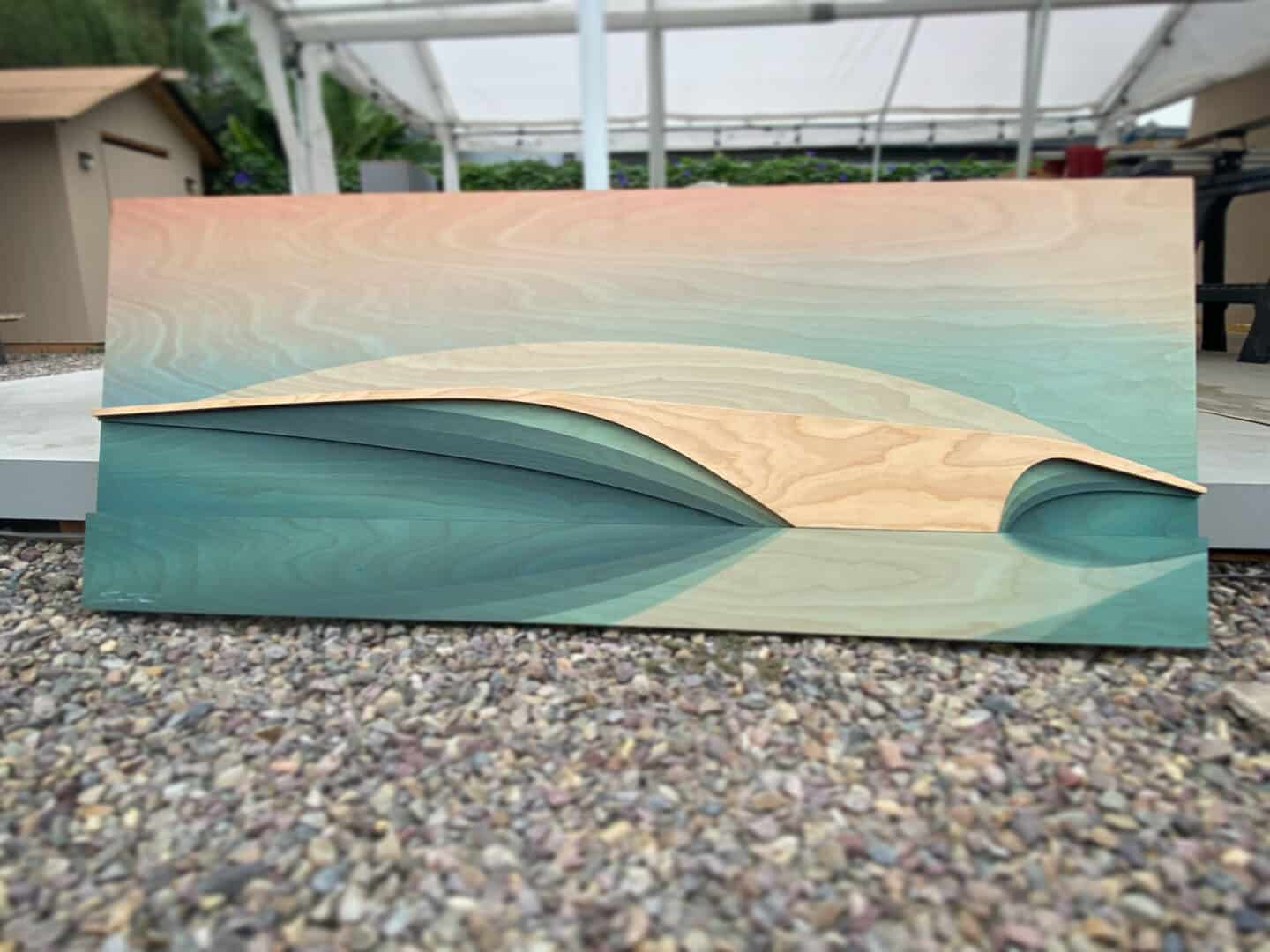
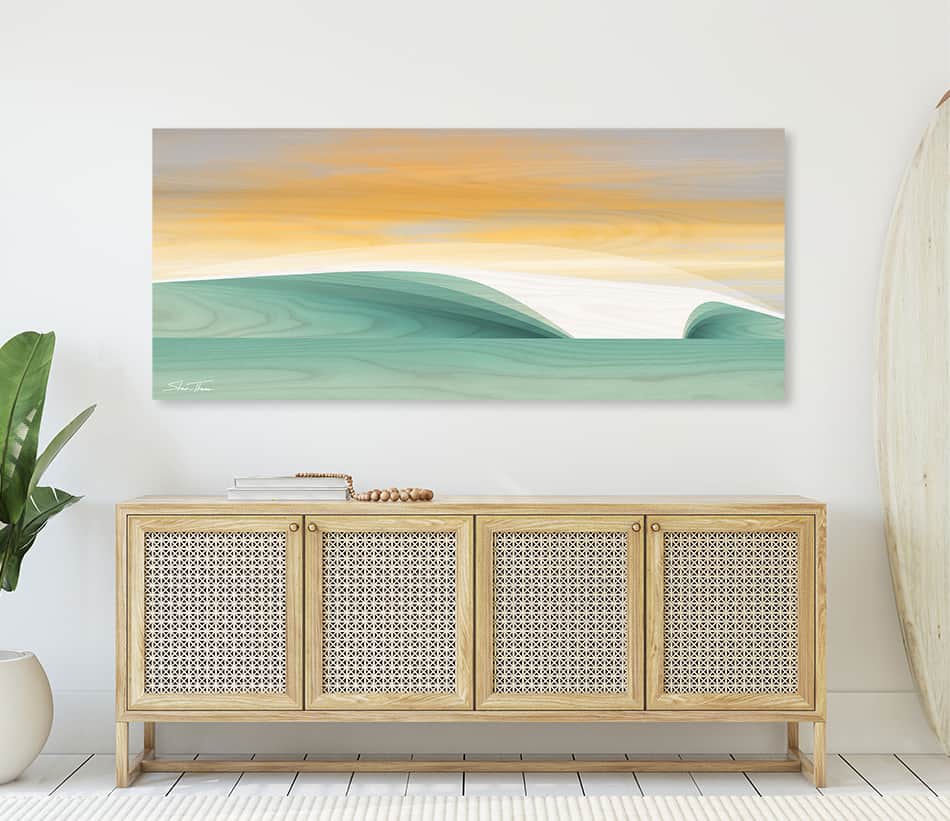
Choose archival, acid-free, OBA-free canvas with pigment inks and a UV topcoat for display life that can exceed 80 to 100 years under typical indoor conditions. Canvas can be re-stretched, re-varnished, and repaired, which extends service life and supports sustainability priorities that lead 2025 coastal decor. For inspiration that blends natural textures with seascapes, see these coastal-inspired sculptures and ocean wave print collection by Shaun Thomas. Acrylic and metal resist moisture better in bathrooms, but they scratch and show fingerprints more readily. For living rooms and bedrooms, archival canvas offers a durable, low-glare finish that aligns with tranquil beach aesthetics and evolving eco-minded design.
The Importance of Ink Quality
Pigment vs dye: durability and fade resistance
Not all inks age the same, and on canvas surf prints the difference shows after one bright season. Pigment-based inks suspend solid particles, which makes them more lightfast and ozone resistant than dye inks that dissolve in fluid. Independent tests often rate pigment sets on coated canvas at 80 to 200 years of indoor display permanence, while dye prints can shift in blues and cyans within a few years under high UV. Pigments also handle humidity and salt air better, a real advantage in coastal homes. For buyers prioritizing sustainability, water-based pigment systems with low VOCs support 2025’s push toward natural, eco-aware living.
How ink choice affects visual appeal
Ink choice also shapes the look and feel. Dye sets can deliver glossy pop, yet on matte or satin canvas their edge narrows, while pigment sets produce deeper blacks and smoother gradients that protect sea mist and foam detail. For ocean palettes, expanded-gamut pigment printers with light cyan, light magenta, and extra blue render teals and indigos cleanly, critical for wave faces and glassy horizons. That aligns with 2025’s Coastal Calm direction, where ocean scenes lead demand and wave motifs top lists in these Summer 2025 wall art trends. If your room leans fisherman-core or pairs rattan, wicker, and driftwood accents, a satin-finish pigment print maintains nuance without glare.
UV-resistant coatings extend lifespan
UV-resistant coatings extend life even further. Aqueous varnishes with UV absorbers can double or triple display longevity versus uncoated canvas, plus add abrasion and moisture resistance for rentals and busy hallways. Use gloss for maximum punch in Urban Glow settings, use matte or satin to support the calmer coastal palette without reflections. For sunlit beach rooms, pair pigment ink with a museum-grade matte varnish, hang out of direct sun, and dust with a dry microfiber cloth. Rule of thumb, uncoated dye prints are temporary decor, pigmented prints with UV coating are the durable choice for galleries, Airbnbs, and long-term coastal living.
Enhancing the Coastal Vibe
Frame strategies for coastal mood
Start with the frame, since it sets the coastal temperature of canvas surf prints before the art lands on the wall. Natural wood, especially oak, ash, or bamboo, delivers the warm tactility that 2025’s Coastal Calm aesthetic favors, and it pairs easily with rattan, wicker, and driftwood. Pros include a grounded, organic feel and timelessness, the main tradeoff is a hint of rusticity in ultra-minimal rooms unless you choose a slim, squared profile. White frames offer a gallery-bright edge that amplifies foam detail and horizon lines, perfect against shiplap or limewashed walls, though they can feel sterile if the space lacks texture. Color-forward frames in sea-glass green, navy, or sunrise coral nod to the fisherman core energy seen in the Hooked on Reel Life collection, great for accent walls and small formats but more trend sensitive. As a rule, pick natural wood for layered, textural rooms, white for airy minimalism, and color for playful nooks.
Patterns, palette, and planet-first choices
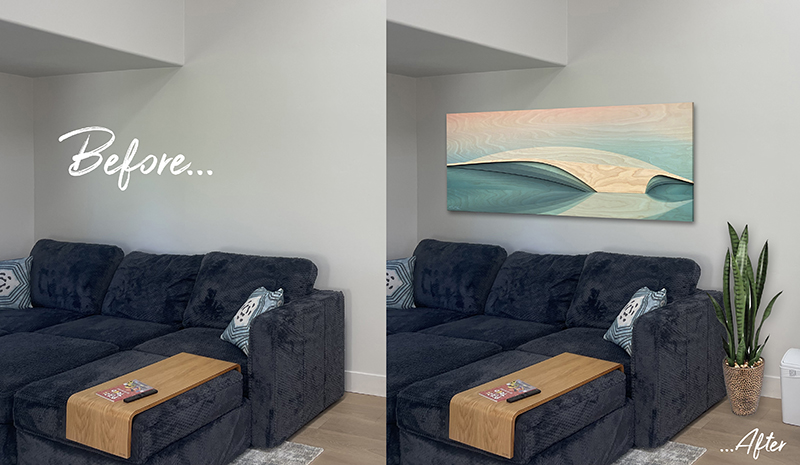
Next, choose imagery that mirrors local light and your fabric palette, not just your favorite break. Ocean and beach scenes are set to dominate summer 2025 wall art, with wave-inspired patterns, sunset horizons, and coastal silhouettes leading, so lean into deep indigo, ultramarine, seafoam, and sand to reinforce the mood. In living rooms, a high-contrast cresting wave in a white frame and seafoam accents reads crisp and modern; in earthy spaces, a natural wood frame around a soft gradient horizon, sandy beige to coral, feels serene and mature. Triptychs of long-period swells carry motion down a hallway, while a single 24 by 36 anchors a sofa and a vertical 16 by 24 suits entries and baths. To align with sustainability priorities for 2025, specify FSC-certified or rapidly renewable woods, low VOC finishes, and recyclable backers, and verify with the FSC-certified wood guidelines. Finish the look by echoing colors in blue ceramics and adding tactile balance with rattan baskets and wicker pendants so your canvas surf prints enhance the coastal vibe without excess.
Recommendations for Buyers
Placement and lighting drive your ink and material choice
Start by mapping where your canvas surf prints will live and how that space behaves across the day. In glare-prone rooms, a matte, poly-cotton canvas controls reflections better than satin finishes and keeps wave texture legible from multiple angles. For softly lit dens or bedrooms, a cotton or cotton-rich canvas with a subtle satin topcoat deepens blues and sunset gradients that are central to the 2025 Coastal Calm look. Pair pigment-based inksets in bright family rooms for superior fade resistance, and reserve lower cost dye ink for shaded corridors or rental turnover art. If you lean into summer 2025 motifs like wave-inspired patterns and coastal silhouettes, evaluate proofs under the actual room lighting; north light can cool highlights, so request a slightly warmer white point to keep sand tones natural.
Sunlit zones demand UV defense
Direct sun is the stress test. South-facing windows can exceed 20,000 lux at noon, so choose pigment inks plus a UV-blocking, water-based varnish with HALS additives for the best defense. Ask for OBA-free canvas in these placements, since optical brighteners can yellow and shift color balance over time. A museum-grade matte varnish reduces gloss while preserving black density, critical for dramatic sunset horizons that are trending for 2025. For bathrooms or kitchens, specify a sealed edge and scrub-resistant topcoat so sea spray imagery survives humidity and spot cleaning. Ocean and beach scenes dominate summer 2025 wall art, but in high sunlight, prioritize UV coatings first, finish sheen second.
Sustainability for the long haul
Sustainability is not only ethical, it is a durability strategy that lowers lifecycle cost. Look for FSC-certified stretcher bars, water-based coatings, and recycled or cotton-rich canvases that align with 2025’s push toward natural textures. Local printing reduces shipping impact and speeds color-matching for Coastal Calm palettes, while driftwood or rattan float frames echo modern coastal materials like wicker and blue ceramics. If your style skews to the Hooked on Reel Life fisherman-core vibe, choose rugged, repairable frames with replaceable corners for a longer service life. Ask labs for end-of-life disassembly plans and inkset lightfast ratings; options rated 60 to 100 years under typical display complement both serene Coastal Calm and bolder Urban Glow spaces without early replacement.
Conclusion: Making the Right Choice
Making the right call across mediums
For canvas surf prints, the core tradeoff is value versus sheen. Canvas offers the best price-to-impact ratio, a forgiving matte texture that mutes glare, and easy sizing for gallery walls. Acrylic delivers high-gloss depth and saturated color, which suits contemporary rooms with controlled lighting, but it costs more and shows reflections. Metal is rugged and crisp, great for minimalist spaces and high-traffic areas, yet it can feel cooler and more reflective than coastal rooms often prefer. Use cases are straightforward: choose canvas for living rooms and bedrooms that favor warmth and scale, acrylic for focal walls in modern condos, and metal for hallways or kitchens where durability matters.
Quality and decor alignment in 2025
Material and ink quality decide long-term satisfaction. Opt for archival poly-cotton canvas, water-based coatings, and pigment inks rated for 80 to 100 years in indoor light. In bright rooms, add a matte UV varnish and request pigment verification on the job ticket. Align your art with 2025’s Coastal Calm trend, where ocean and beach scenes dominate summer wall art and wave-inspired patterns, sunset horizons, and coastal silhouettes lead demand. Pair canvas with natural textures for a cohesive look, for example rattan or driftwood float frames and blue ceramic accents; this matches sustainability-forward decor that uses wicker, reclaimed wood, and low-VOC finishes. If your style leans fisherman core, echo nautical elements with rope-accent mounts, brass hardware, and weathered oak. Before committing to a statement 30 by 45, order a small proof under your actual room lighting. This keeps the choice practical, personal, and future-proof.